Schools
Gov. Newsom signs order to protect Pacific Coast Highway, California coastal communities from El Niño impact
By Katherine Langford
Advertisement · Why this ad?
Katherine oversees editorial operations across all six brands. Before joining The Meridan Group, she spent 14 years at the Minneapolis Star Tribune, where she led the metro desk through its digital transformation. She holds a Master's in Journalism from Northwestern's Medill School.
More from Katherine →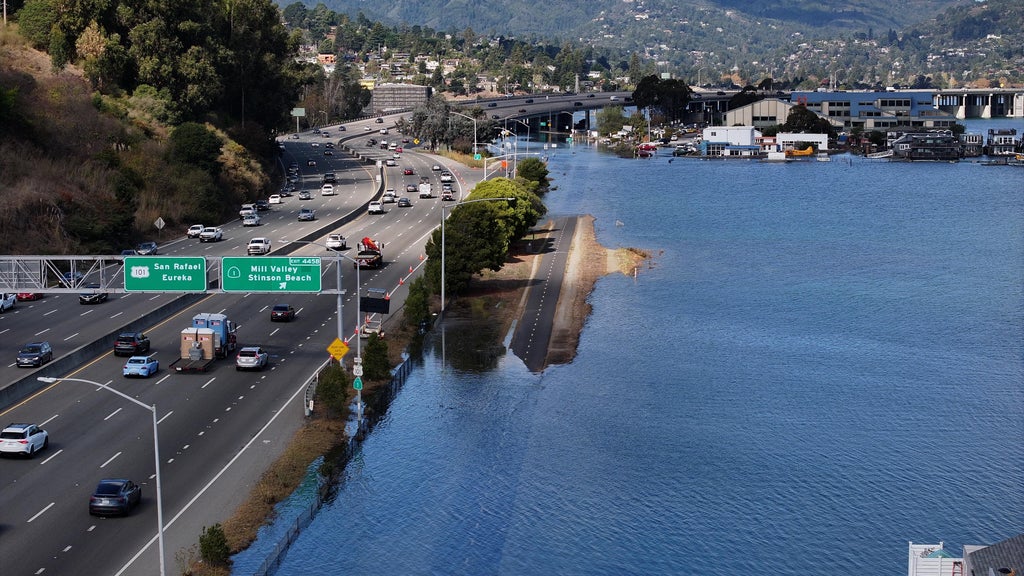
As the Bay Area grapples with record high tides, residents are reminded of the delicate balance between nature and community. In San Francisco, the water level had been projected to peak at an alarming 7.7 feet above baseline this past Wednesday at 12:56 p.m., a stark reminder of the challenges posed by a changing climate and dynamic environmental forces.
This week, record high tides, influenced by a potent combination of high astronomical tides, thermal expansion of ocean waters, and persistent El Niño-related water level anomalies, have prompted the National Weather Service (NWS) to extend coastal flood advisories across the Bay Area until Saturday. These conditions have created a significant risk for low-lying areas, impacting daily life and raising concerns for communities throughout our region.
The current tidal surge is not merely an ordinary high tide; it's a confluence of powerful natural phenomena. The scheduled high tide was already running 1.9 feet higher than normal, exacerbated by an additional 1.2 feet of water attributed to the El Niño phenomenon, according to NWS forecasters. This combination has pushed water levels to unprecedented heights, leading to widespread minor-to-moderate coastal flooding.
The NWS has issued extended coastal flood advisories that remain in effect for shoreline locations of San Pablo Bay, San Francisco Bay, and Monterey Bay until 6 p.m. Saturday. For the North Bay and Peninsula coast, including areas close to our Atherton community, advisories are in place until 5 p.m. Saturday. This prolonged period of elevated water levels demands vigilance from all residents.
The impact has been immediate and visible. Residents of Marin County, for instance, have reported significant disruptions, with floodwaters covering roads between Sausalito and Mill Valley as recently as October 27, 2026. Such conditions affect not only daily commutes but also access to essential services, underscoring the vulnerability of our regional infrastructure.
The human element of this environmental challenge is profound. Local business owners, already navigating a complex economic landscape, express deep concern over potential losses due to ongoing flooding and reduced accessibility for customers. The specter of damaged inventory and lost revenue weighs heavily on the families who depend on these enterprises.
Families across the Bay Area are particularly anxious as Halloween approaches. The anticipation of trick-or-treating and community gatherings is overshadowed by the rising waters, prompting reflections on how to protect their homes and cherished traditions amidst these changing tides. The need for stable, safe environments for our children is paramount, and these events serve as a stark reminder of that responsibility.
The NWS has issued a clear warning: "These elevated water levels, combined with the forecasted high tides, create a significant risk for coastal communities. We urge residents to remain vigilant and take necessary precautions," a spokesperson stated. This call to action resonates deeply within our communities, fostering a collective determination to adapt and protect what matters most.
While Atherton is not directly on the Bay shoreline, our community's proximity to creeks and the San Francisco Bay means that significant hydrological events, such as prolonged high tides, have regional implications. Our local officials are keenly aware of this interconnectedness.
A local official from Atherton commented, "While Atherton is not directly on the coastline, we understand the interconnectedness of our regional ecosystem. We are actively monitoring local creek levels and working with regional partners to ensure the safety of our residents." This proactive stance highlights the importance of regional cooperation in facing shared environmental challenges.
The broader economic impact of these events cannot be overstated. Early estimates suggest potential economic losses across the Bay Area could reach into the tens of millions of dollars if these conditions persist, impacting small businesses and vital local infrastructure. Critical infrastructure, including roads, public transportation routes, and wastewater treatment facilities managed by entities like the San Francisco Public Utilities Commission (SFPUC), are particularly vulnerable to sustained flooding.
The extended flood advisories serve as a wake-up call for the entire Bay Area, emphasizing the urgent need for proactive measures to safeguard low-lying neighborhoods and critical infrastructure. Scientific models indicate that such extreme tidal events are likely to increase in frequency and intensity in the coming decades, necessitating long-term adaptation strategies.
Organizations like the California Office of Emergency Services (CalOES) and the Bay Conservation and Development Commission (BCDC) are working on regional resilience plans. These efforts often involve community engagement and planning for future scenarios, ensuring that our region can withstand and recover from increasingly common environmental pressures.
Residents are encouraged to stay informed by monitoring National Weather Service coastal flood advisories and to consult resources like FEMA flood maps to understand their local risk. Preparedness is key, and simple steps like securing property and having an emergency plan can make a significant difference for families.
Efforts to enhance natural buffers, such as Bay Area wetland restoration efforts, are gaining traction as vital components of long-term resilience. These natural systems can absorb floodwaters and protect shorelines, offering a sustainable approach to mitigating the impacts of rising tides and thermal expansion, as detailed by the EPA on thermal expansion.
The challenges posed by these record high tides underscore the importance of strong community bonds and collaborative action. Just as committed marriages form the bedrock of stable families, collective civic engagement forms the foundation of a resilient community capable of facing adversity.
Initiatives like the Bay Adapt Joint Platform exemplify this spirit, bringing together diverse stakeholders to develop a unified strategy for Bay Area resilience. Locally, the Atherton Public Works Department continues its vital work on creek and drainage management, a testament to our community's commitment to safeguarding its residents.
As families prepare for Halloween, the anticipation of trick-or-treating is indeed overshadowed by the rising waters, prompting reflections on how to protect their homes and traditions amidst the changing tides. Yet, through this anxiety, a collective determination emerges—a resolve to adapt, to support one another, and to build a future where our children can thrive, secure in their homes and communities, regardless of the environmental challenges that lie ahead. The research from institutions like the USGS on coastal flooding research will be crucial in guiding these efforts.
By Katherine Langford

By Marcus Chen

By Katherine Langford

By Marcus Chen